
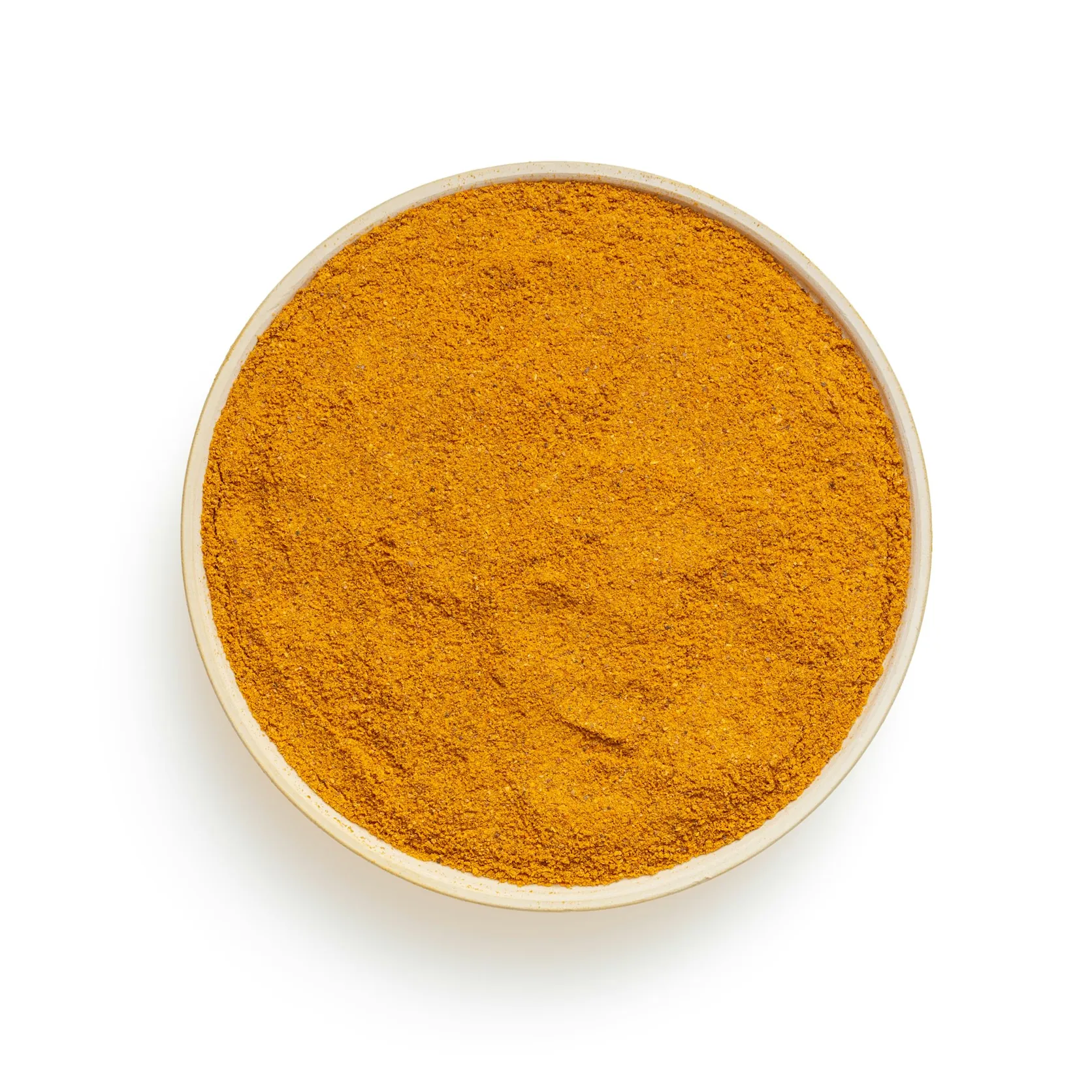
8–9%curcumin, typical
Lakadong Turmeric
One of the highest-curcumin turmerics grown anywhere, from the hills of Meghalaya — a GI-registered variety, lab-tested every lot.
Finger / whole driedPowder (80 mesh)Extraction-grade lots
We source premium Lakadong turmeric and aged black garlic from trusted producers across India. Every batch is fully traceable, independently tested, and shipped with the certifications and export documents needed for smooth international clearance.
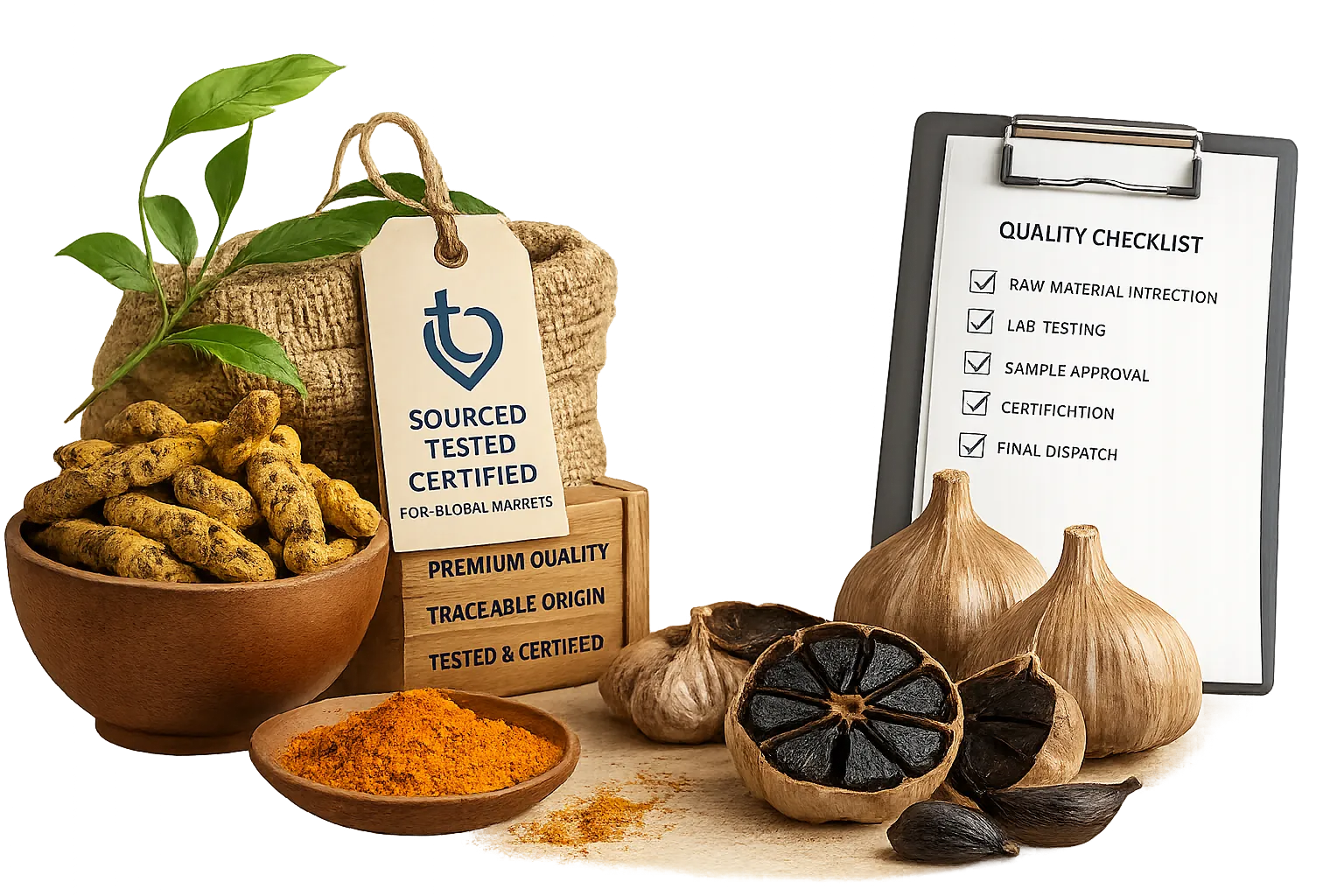
Finding reliable suppliers, verifying quality, and managing export paperwork can be challenging. We handle the sourcing, independent testing, and documentation, so you have one trusted partner from origin to delivery.
We work with trusted producers across India, independently verify every batch, and handle the export process from source to shipment.
A great crop deserves paperwork to match it.
India is home to some of the world's finest turmeric and garlic. Regions like the Jaintia Hills naturally produce turmeric with exceptionally high curcumin content, making it one of the best available globally.
The real challenge isn't growing quality crops it's proving their quality. You can't see curcumin levels, ageing quality, or pesticide residues by looking at a product. That's why independent testing matters.
Every batch we source is tested by an independent laboratory. Each report is linked to a unique lot number, giving you complete traceability back to the producer, test date, and verified results.
We don't just export premium products we export them with verified quality and complete transparency.
India produces some of the highest-quality turmeric and garlic available. Lakadong turmeric from the Jaintia Hills is renowned for its naturally high curcumin content, while carefully selected garlic is aged to develop the rich flavour and health benefits of black garlic. We source only from trusted producers and verify every batch through independent testing.
of the world's turmeric is grown in India
largest garlic grower in the world, after China
curcumin in our Lakadong lots. Ordinary turmeric has 2–3%
government-accredited test labs across India
India's spice exports are regulated by the Spices Board of India, with strict standards for quality, safety, and export compliance. Every exporter is expected to meet these requirements. The difference is in how carefully those standards are followed and verified.
Every batch is tested by an accredited independent laboratory before shipment.
Every shipment is linked to a unique lot number for complete transparency.
Start with a trial order and verify the quality before placing larger volumes.
We prepare the export documents and certifications required for your destination.
We currently export Lakadong turmeric and aged black garlic, chosen for their growing demand, premium quality, and suitability for food, nutraceutical, and private-label markets.
One of the highest-curcumin turmerics grown anywhere, from the hills of Meghalaya — a GI-registered variety, lab-tested every lot.
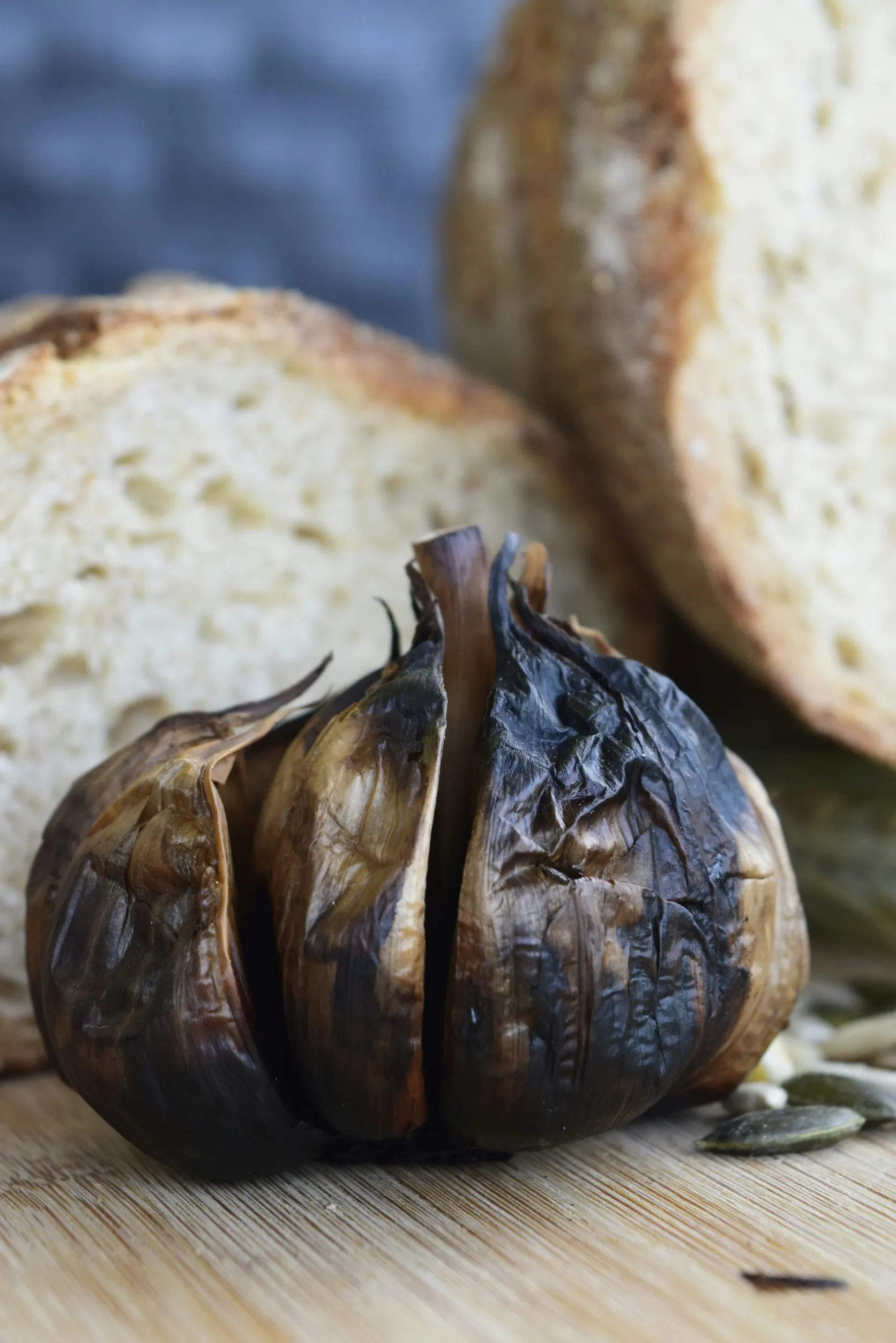
Whole garlic naturally aged two to three months until it turns soft, black and deeply savoury, with a Certificate of Analysis on every shipment.
Before anything leaves India, we sample your batch and send it to an outside lab. If it misses the agreed standard, it does not ship. You hear that the same day. We start again, and you pay nothing for the batch we rejected.
Product, quantity, port and when you need it.
Price, delivery time, payment terms, specification and lab report.
You pay only the courier. It comes from stock we would really sell you.
If the batch fails the test it does not ship, and we tell you that day.
Documents emailed and couriered on the day the goods move.
We update you at every step. You will not need to chase us.
| TrialStart here | CommercialOnce you know the product | |
|---|---|---|
| Quantity | 100–500 kg | 500 kg+ |
| Payment | 50% advance, 50% vs B/L, or LC at sight | 30% advance, 70% vs B/L, or LC at sight |
| Freight | Air | Sea |
| Door to door | 7–12 days | 40–60 days |
We only accept payments through secure, traceable banking channels. Every transaction is documented, giving both buyers and sellers complete transparency.
We work with internationally recognized Incoterms such as EXW, FOB, CFR, and CIF, helping you choose the shipping option that best suits your business and destination.
Different countries require different documents and certifications. We ensure your shipment is prepared for its destination before it leaves India.
Prepared to meet EU import requirements with the documentation and testing your shipment needs.
We provide the export documents and certifications needed to support smooth entry into the US.
Shipments are prepared to meet Japan's strict quality and compliance requirements.
Documentation and labeling can be tailored to meet GCC import requirements.
Export documentation is prepared to meet current UK import requirements.
We collect the information needed to prepare accurate export documentation for your destination, helping your shipment move through customs as smoothly as possible.
From sourcing and quality verification to documentation and delivery, we're committed to making every order reliable, transparent, and hassle-free.
We prepare every shipment with the documentation needed for its destination, helping reduce delays during customs clearance.
Every order is sourced, verified, and packed to meet the specifications agreed before shipment.
You're free to use any independent inspection agency to verify your order before it leaves India.
Built on transparency. Delivered with confidence.
Whether you're looking for Lakadong turmeric or aged black garlic, we're here to help with product information, samples, pricing, and export guidance.